Neuro-Safety & Human Risk Systems
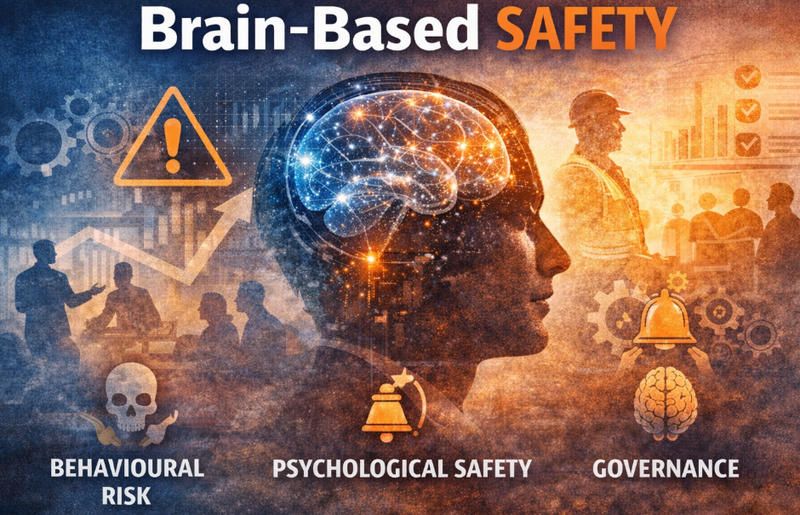
Neuro-Safety & Human Risk Systems
Where leadership, systems and the human brain collide
Most safety systems are built around compliance.
Policies. Procedures. Reporting.
And yet — incidents still happen.
People stay silent.
Leaders make poor decisions under pressure.
Not because people don’t care.
👉 Because systems are not designed for how the human brain actually functions under stress, fatigue and pressure.
Why This Is My Focus
My work in Neuro-Safety is grounded in both lived experience and formal study, including a Master of Neuroscience.
After years working in high-risk environments, I saw the same pattern repeatedly:
- capable leaders making poor decisions under pressure
- people staying silent when they should speak up
- systems that looked strong on paper but failed in reality
This isn’t a capability issue.
👉 It’s a human + system misalignment problem
And it is predictable.
What This Service Does
This service identifies where your organisation’s systems, leadership behaviours and operating pressures are misaligned with human cognitive capacity — creating risk that traditional safety approaches cannot detect.
We focus on:
- how decisions are made under pressure
- where cognitive overload reduces judgement and awareness
- how fatigue, stress and competing priorities impact behaviour
- where authority dynamics prevent escalation or challenge
- why workarounds and unsafe decisions become normalised
Why This Matters
Unsafe behaviour is rarely random.
It is the predictable result of:
- system design
- leadership signals
- and human limitations under pressure
Most organisations investigate incidents after they occur.
👉 This work identifies why they were always going to happen.
What You Receive
- A Human Risk & Decision-Making Assessment grounded in real work conditions
- A clear, governance-ready report identifying where risk is being created and why
- Practical, prioritised recommendations to reduce risk at system level
- Insight into how leadership behaviour is shaping decision-making and safety outcomes
- Documentation that supports due diligence, accountability and defensibility
What Makes This Different
This is not wellbeing.
This is not behavioural training.
👉 This is neuroscience-informed risk and governance work
It bridges:
- neuroscience
- human factors
- leadership behaviour
- WHS obligations
To explain not just what is happening — but why it keeps happening.
When Organisations Engage This Work
- incidents continue despite strong systems
- leaders are under pressure and decisions are breaking down
- people are not speaking up or reporting early
- psychosocial and human factors risks are increasing
- there is a need for stronger governance and defensibility
The Outcome
You move from:
👉 reacting to human error
To:
👉 designing systems that work with human capability — not against it
People don’t choose unsafe behaviour.
Behaviour is shaped by the conditions in which decisions are made.Robust Leaders helps organisations design those conditions deliberately.