Keynote Speaking: The Neuroscience of Better Workplaces
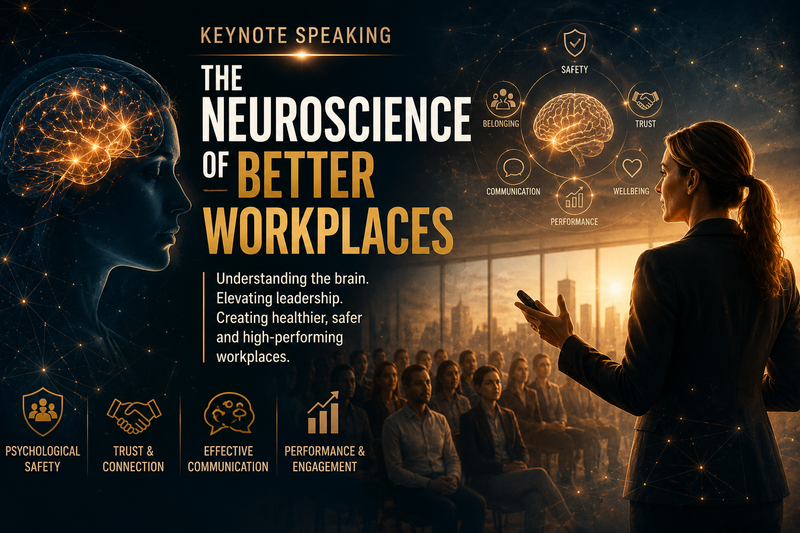
The Neuroscience of Better Workplaces™
Keynote Presentation
How Understanding Human Behaviour Creates Safer, Healthier and Higher-Performing Workplaces
Workplaces are facing unprecedented challenges.
Burnout, disengagement, workplace conflict, psychological injury claims, retention issues and declining trust continue to impact organisations across every sector.
While many organisations focus on policies, procedures and performance management systems, one critical factor is often overlooked: human behaviour.
The Neuroscience of Better Workplaces™ is a thought-provoking keynote presentation that explores how the brain influences the way people think, communicate, respond to stress, build relationships, make decisions and perform at work.
Drawing on neuroscience, psychology, leadership and workplace culture research, this keynote helps leaders understand why people behave the way they do and how leadership behaviours can either create psychological safety, trust and engagement or contribute to fear, disengagement and workplace harm.
Participants will discover how the brain responds to safety, threat, uncertainty, belonging and trust, and why these factors directly influence workplace culture, communication, collaboration and performance.
The presentation also explores the role leaders play in shaping employee experiences from recruitment and onboarding through to communication, feedback, team dynamics and culture development.
This keynote is particularly relevant for organisations seeking to strengthen leadership capability, improve workplace culture, support psychological safety initiatives and better manage psychosocial risks.
Key Discussion Areas
• The neuroscience of human behaviour at work
• Why people behave the way they do
• The brain's response to safety, threat and uncertainty
• Psychological safety and workplace performance
• Trust, belonging and engagement
• Leadership behaviours that influence culture
• Communication and its impact on the brain
• The connection between leadership, wellbeing and performance
• Creating healthier and more human-centred workplaces
Audience Outcomes
Participants will leave with:
• A deeper understanding of human behaviour
• Greater awareness of how leadership influences workplace culture
• Practical strategies to build trust and psychological safety
• Insights into improving communication and team engagement
• A framework for creating healthier, safer and higher-performing workplaces
Ideal For
Executives
Senior Leaders
People Leaders
HR Professionals
Work Health & Safety Professionals
Organisational Development Teams
Conference Delegates
Leadership Forums
Industry Events
Key Message
The most effective workplaces are not built solely through systems and processes.
They are built by leaders who understand people.
When we understand how the brain influences behaviour, communication, trust and performance, we create workplaces where people feel safer, more connected, more engaged and better equipped to thrive.