Psychological Safety Workshop
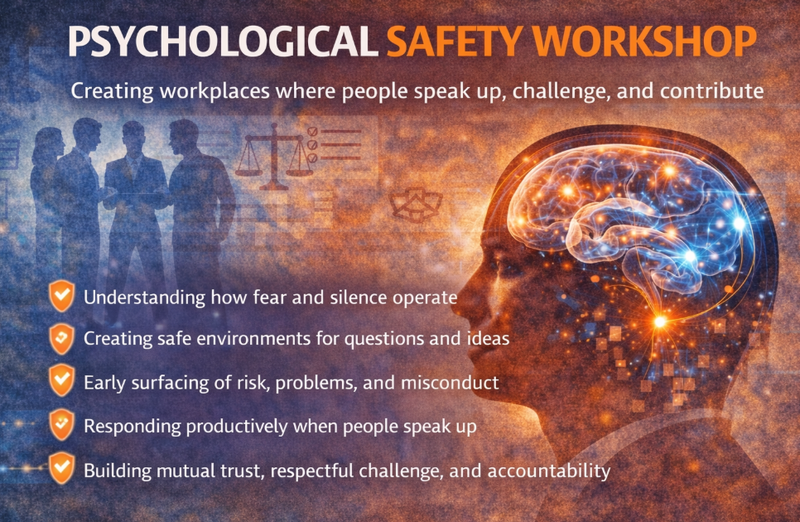
Why Organisations Engage in This Workshop
Many workplace issues — including incidents, misconduct, disengagement, and poor decision-making — occur not because people didn’t know, but because they didn’t feel safe to speak up.
Psychological safety is a critical enabler of effective governance, WHS, risk management, and leadership. Without it, risks remain hidden, early warning signs are missed, and organisations become reactive rather than proactive.
This workshop helps organisations move beyond superficial culture initiatives and understand psychological safety as a core risk control and performance driver, not a “soft” concept.
What Participants Will Learn
Participants will develop an understanding of:
What psychological safety is — and what it is not
How fear, hierarchy, and past experiences suppress voice
The link between silence, risk, and organisational failure
Leader behaviours that unintentionally shut people down
How to respond when someone speaks up — especially under pressure
Practical behaviours that build trust, accountability, and respectful challenge
The focus is on real-world application, not theory.
Who Benefits from This Workshop
This workshop is suited to:
Leaders and supervisors at all levels
Boards and executive teams
HR, WHS, and governance professionals
Teams operating in complex or high-risk environments
It is particularly valuable for organisations experiencing disengagement, complaints, high turnover, or cultural tension.
How the Workshop Is Delivered
The Psychological Safety Workshop is delivered by an experienced consultant who attends your workplace and tailors content to your organisational context.
Delivery options include:
Standard workshop (3–4 hours) — interactive learning with discussion and practical tools
Lunch & Learn session — shorter, targeted introduction to psychological safety concepts
Sessions can be delivered on-site or virtually.
The Outcome
Organisations typically experience:
Increased speak-up and reporting
Earlier identification of risks and issues
Improved trust and engagement
Stronger leadership credibility
Reduced conflict, complaints, and rework