Behavioural & Human Factors Risk & System Design
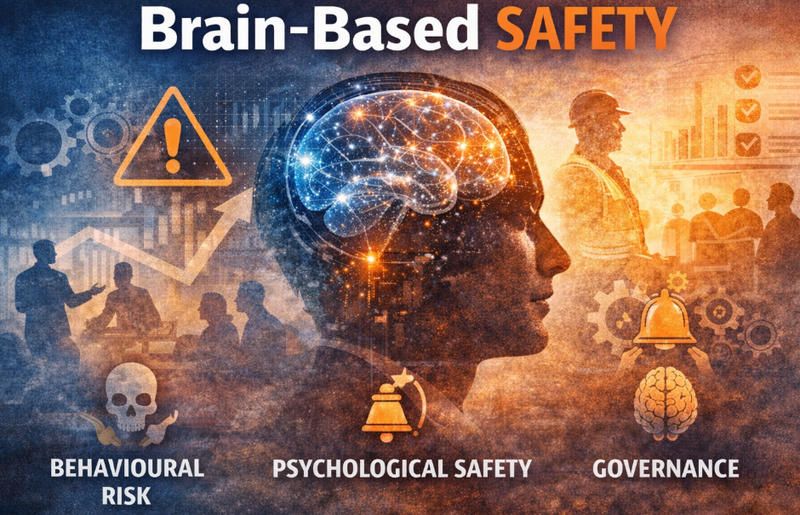
Brain-Based Safety Consultancy
Harnessing Neuroscience, Behavioural Risk and Governance to Improve Safety Performance
Traditional work health and safety systems place strong emphasis on compliance, policies and procedures. While these are essential, they do not fully explain why capable, well-intentioned people still take unsafe risks, remain silent, or make poor decisions under pressure.
Real safety performance is shaped by how the human brain responds to stress, fatigue, authority, time pressure and competing priorities. Robust Leaders’ Brain-Based Safety Consultancy integrates neuroscience, psychology, governance and risk management to help organisations understand and address the human factors that drive safety outcomes in real operational environments.
This work moves safety beyond documentation and into the conditions that influence how people actually think, decide, react and behave at work.
Safety Designed for How the Brain Works
Human behaviour is rarely a simple matter of attitude, motivation or awareness. Risk-taking, silence, shortcuts and unsafe acts are often predictable neurobiological responses to pressure, cognitive overload, threat and system design.
Drawing on neuroscience and behavioural science, Robust Leaders helps organisations identify where existing systems, leadership practices and work conditions unintentionally increase cognitive load, suppress reporting or reinforce unsafe behaviour. We then support the redesign of those conditions so safer decisions are more likely — even under pressure.
This approach does not excuse unsafe behaviour. It explains it, so it can be addressed at the level where risk is actually created.
Our Brain-Based Safety Services
Neuro-Behavioural WHS Audits and Cultural Diagnostics
We assess safety not only through policies and systems, but through how work is experienced in practice. This includes examining decision-making under pressure, risk perception, silence and reporting behaviour, competing priorities and informal norms that influence how work is really done. These reviews identify where unsafe workarounds are unintentionally reinforced and where formal systems are misaligned with human capability.
Governance and Leadership Accountability for Safety
We support organisations to strengthen governance structures so safety accountability is clear, decision-making is supported, and psychological safety in reporting is real rather than implied. This includes aligning leadership behaviour with WHS obligations, integrating psychosocial and human factors into risk oversight, and ensuring safety governance is lived in practice — not merely documented.
Neuro-Informed Risk Management
Risk decisions are not purely rational. We embed human factors and neuroscience into risk processes to ensure controls are cognitively realistic, usable and effective in operational conditions. This strengthens decision-making under pressure, fatigue-aware risk assessment and the ability to pause, assess and respond rather than react.
Cognitive-Friendly Safety Systems and Reporting
We redesign safety documentation, reporting tools and learning processes to reduce cognitive overload and improve usability. Clear, intuitive systems support better reporting quality, more meaningful learning and earlier identification of emerging risk.
Brain-Based Safety Education and Learning
We deliver practical, evidence-based learning for leaders and operational teams on how stress, fatigue, authority and culture shape behaviour, why capable people take unsafe risks, and how psychological safety and speak-up capability can be strengthened in real work contexts.
When Organisations Engage This Service
This consultancy is typically engaged by organisations that recognise safety challenges are not being solved through compliance alone, including where incident trends persist despite strong systems, leadership behaviour is influencing risk, or psychosocial factors are impacting safety performance.
It is particularly suited to organisations operating in complex, high-pressure or high-risk environments where human decision-making plays a critical role in safety outcomes.
In Practice
Brain-Based Safety Consultancy supports organisations to move beyond reactive safety management toward mature, human-centred and sustainable risk control, where systems, leadership and neurobiology are deliberately aligned to support safer work.
People do not simply choose safe behaviour.
Behaviour is shaped by the conditions in which decisions are made.
Robust Leaders helps organisations design those conditions deliberately.