The Most Dangerous Hazard in the Workplace: The Arsehole Manager
By Rose Byass
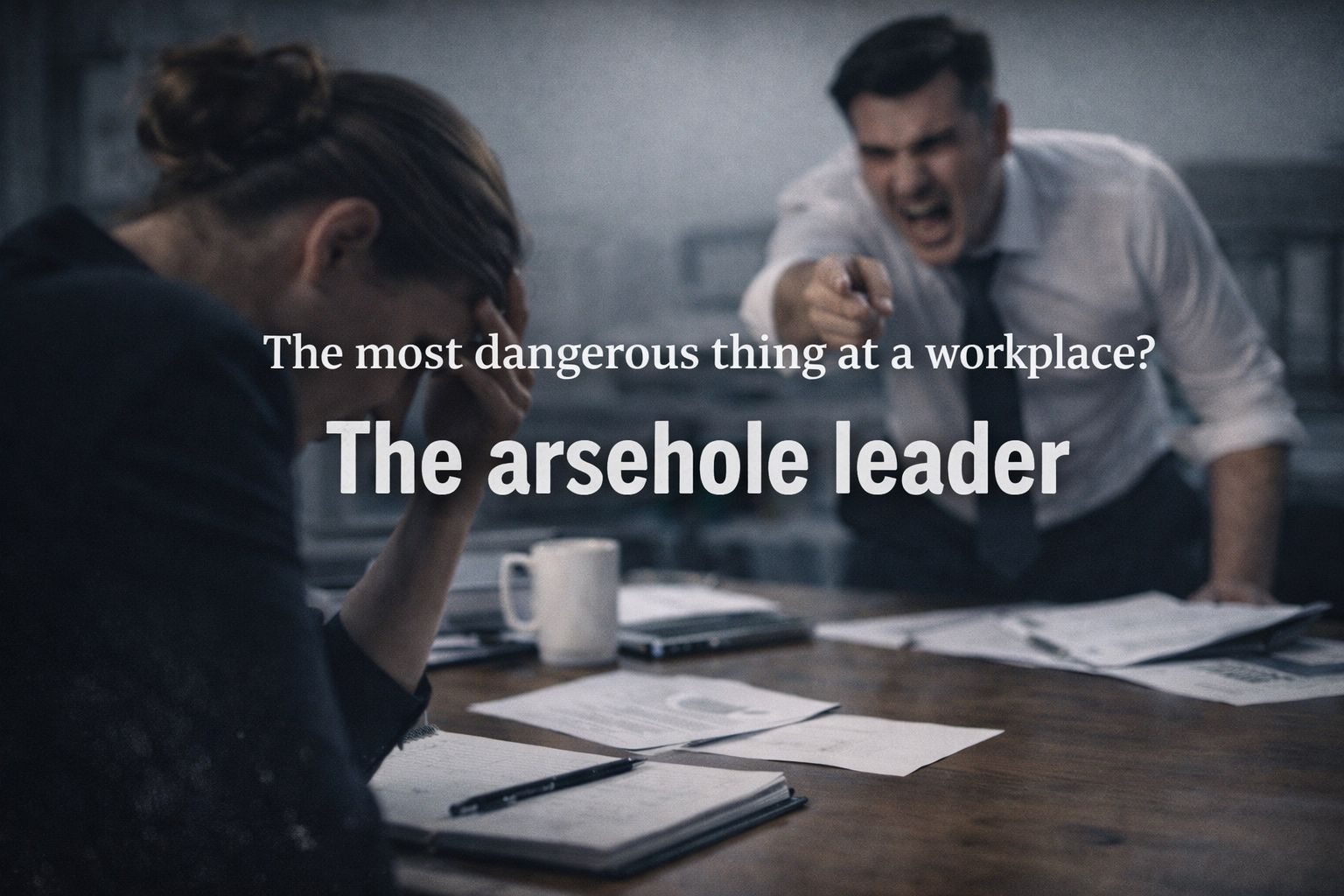
There is no legislation that says: “Arseholes are not to be employed in management positions.”
Although, frankly, there should be.
We could call it the Wanker Clause.
What we do have are Work Health and Safety laws that entitle every worker—regardless of industry—to a safe workplace. And yes, that includes psychological safety, not just hard hats and high-vis.
Let’s Call It What It Is
Most organisations are very good at managing visible hazards.
A trip hazard is identified. We fix it.
Broken handrail. Replace it.
Chemical spill? Contain it.
But when it comes to a toxic manager? Suddenly… we hesitate.
We “manage it.”
We “coach it.”
We “wait and see.
Even worse, we refer the bullied person to EAP, while the bully continues to do what they do best.
Be an Arsehole!
The Neuroscience of Fear
Here’s where it gets interesting—and a little uncomfortable.
When an employee is exposed to a bullying or threatening manager, the brain does something very predictable. It shifts into threat mode.The amygdala (your brain’s alarm system) fires up and essentially says:
“We are not safe. Shut down non-essential functions.”
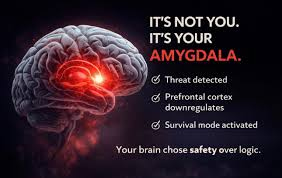
And guess what’s considered “non-essential”?
- Strategic thinking
- Decision-making
- Creativity
- Problem-solving
- Speaking up
All the things you pay people for.
Research from neuroscientist Joseph LeDoux shows that fear responses bypass rational processing. In simple terms: when people feel threatened, they literally cannot think clearly.
Further, studies by Amy Edmondson demonstrate that teams lacking psychological safety have significantly lower performance, reduced learning behaviour and higher error rates.
So when your team looks disengaged, hesitant or “underperforming”—
they might not be the problem; it might be the bad manager you pay to bully your employees.
Met's Meet "Andrew" (We All Know One)
Andrew is a that “great guy.”
Andrew is in management; for reasons that are beyond me.
However, he keeps his job because he's good at what he does.
Manipulating the narrative.
Andrew is:
- Polite to executives
- Volunteers on weekends
- Organises the corporate golf day
- Has a degree in accounting
- Even recycles cans for cash.
How could he be arsehole?
But behind closed doors?
Andrew micromanages.
He belittles.
He installs fear.
He screams and shames his subordinates.
He knows exactly who he can and cannot behave badly in front of. Andrew isn’t stupid.
Andrew is strategic. He even teams up with a co-manipulator/ bully. For this story, we will call her Alice she works in unison to further target Andrew's prey.
And you’ve just put him in charge of people.
The Cost of Keeping the Arsehole
Let’s drop the humour for a second.
Keeping a toxic manager is not just frustrating—it’s risk exposure.
You are opening your organisation up to:
- Psychological injury claims
- WorkCover cases
- WorkSafe investigations
- Fair Work Commission applications
- Bullying and harassment complaints
- Constructive dismissal claims
And beyond legal risk?
- Talent walks out the door
- Productivity drops
- Culture erodes
- Reputation tanks
Your employer brand becomes:
“Great company… shame about that one manager.”
And people talk.
On Glassdoor.
On LinkedIn.
At BBQs.
Here’s the Part Leaders Don’t Want to Hear
If you know damn well Andrew is a problem… and you keep him anyway?
That’s not poor leadership.
That’s negligence. You have been told there is a hazard. And you are not doing anything about it.
You have chosen not to act. Imagine applying that logic to physical safety:
“Yes, we know the scaffold is unstable, but he’s been here a long time.”
Not good enough.
Do better.
What Andrew is doing is quite literally impacting someone’s brain.
When a person is repeatedly exposed to intimidation, humiliation or unpredictable behaviour, the brain registers this as a threat. The amygdala fires, cortisol floods the system, and the prefrontal cortex—the part responsible for thinking, decision-making and emotional regulation—starts to go offline. Over time, this isn’t just stressful, it’s damaging.
We would never accept an employer physically punching someone in the face—yet what Andrew is doing can be just as harmful, only less visible. Prolonged exposure to this kind of psychological threat has been linked to anxiety, depression, burnout and even long-term changes in brain function.
So let’s be clear: this isn’t a personality problem.
This is harm.
The Schoolyard Test
Let’s simplify it. Would you allow a teacher to bully your child five days a week? Would you accept your child coming home:
- anxious
- withdrawn
- fearful of going back
- Dropping grades
- Absent from school
No. You’d be at the school immediately. So why is it acceptable in your workplace?
Your employees are someone else’s family.
Organisations: You Have Two Choices
- Do the hard thing
- Address the behaviour
- Remove the risk
- Build psychologically safe leadership
- Do the easy thing (for now)
- Keep the arsehole
- Pay for it later in claims, turnover and reputation
Because make no mistake—
you will pay for it.
Final Thought
The biggest workplace hazard isn’t always visible. It doesn’t wear steel caps.
It doesn’t sit on a risk register. Sometimes, it sits in a leadership meeting. Your reputation matters.
Your people matter.
Your legal obligations are very real.
And your biggest risk? Is pretending your arsehole manager isn’t one.
Robust Leaders
Building strong organisations—one less arsehole at a time.