Neuroscience and Risk Perception in High-Risk Environments
By Rose Byass
Why Stress, Fatigue and Cognitive Diversity Matter for Safety Leadership
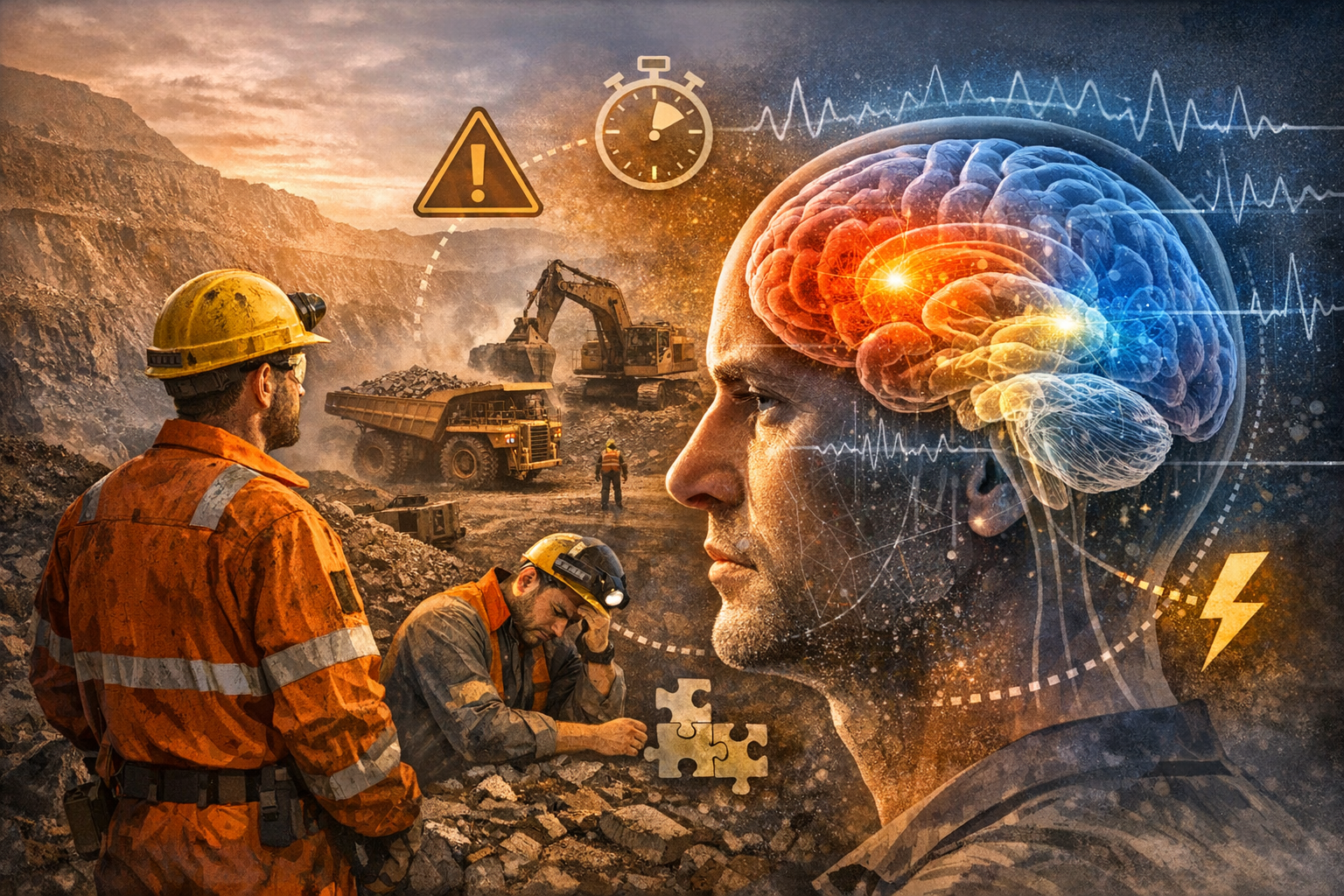
High-risk industries such as mining, energy, construction and aviation operate in environments where small cognitive errors can have catastrophic consequences. Despite decades of safety management improvements, workplace incidents continue to occur across advanced economies. In Australia alone, 188 workers died from traumatic workplace injuries in 2024, and over 146,700 serious compensation claims were recorded in 2023–24—equivalent to more than 400 serious injuries per day across the workforce. These statistics highlight a persistent challenge for safety leadership: even in well-regulated environments with sophisticated systems and procedures, human decision-making remains a critical vulnerability. Traditional risk management approaches often assume that people perceive hazards rationally and consistently. Neuroscience, however, suggests otherwise. Human perception of risk is profoundly shaped by brain physiology, emotional state, fatigue and cognitive diversity. For leaders in high-risk environments, understanding the neuroscience of decision-making offers a powerful lens to improve safety systems. By recognising how stress, fatigue and neurodivergent thinking influence hazard perception, organisations can design safer workplaces that account for human cognitive limits rather than ignoring them.
The Neuroscience of Risk Perception
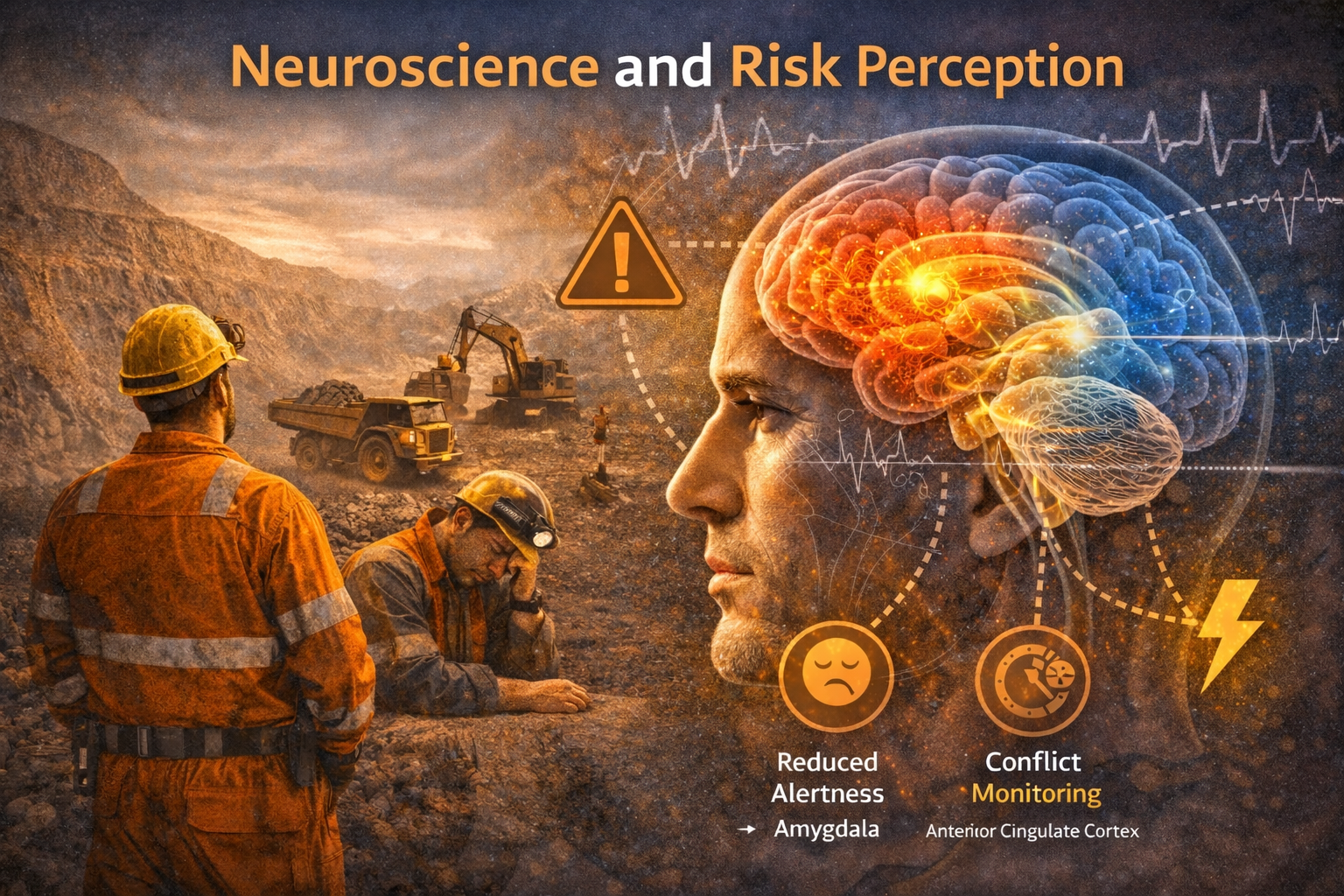
Risk perception is not simply a logical calculation. Instead, it emerges from interactions between multiple brain systems responsible for attention, emotion and executive control. Three neural systems are particularly relevant in high-risk decision making:
1. The amygdala – threat detection
The amygdala rapidly processes emotional signals, particularly fear and perceived danger. In uncertain environments, it triggers rapid reactions before conscious reasoning occurs.
2. The prefrontal cortex – judgement and control
This region supports planning, reasoning and impulse control. It evaluates consequences and regulates emotional responses.
3. The anterior cingulate cortex – conflict monitoring
This region detects errors or discrepancies between expectations and reality. Under ideal conditions, these systems balance each other. The amygdala signals potential threats, the prefrontal cortex evaluates them rationally, and the anterior cingulate monitors mistakes. However, in high-pressure environments this balance becomes disrupted. Stress hormones, fatigue and cognitive overload impair the brain’s executive functions, shifting decision-making toward faster but less accurate emotional responses. Neuroscience research using EEG technology in mining environments demonstrates that risk decisions involve measurable brain responses related to emotional evaluation and attention allocation. These neural signals change depending on the level of psychological stress and personal involvement in the hazard scenario, indicating that cognitive and emotional states directly influence safety decisions. In other words, risk perception is not purely procedural—it is biological.
Stress and the Warping of Risk Judgement
High-risk industries often involve time pressure, isolation, remote rosters and heavy workloads. These factors produce chronic stress that directly affects cognitive performance. Stress activates the body’s hypothalamic-pituitary-adrenal (HPA) axis, releasing cortisol and adrenaline. While short bursts of stress can improve alertness, sustained stress impairs executive functions such as:
- situational awareness
- working memory
- impulse control
- hazard evaluation
In mining operations, unmanaged psychological stress has been linked to absenteeism, reduced productivity and increased human error, all of which increase safety risk. When stress levels remain elevated, individuals tend to rely on heuristics—mental shortcuts that simplify complex decisions. While heuristics allow rapid responses, they also introduce biases such as:
- normalisation of risk (accepting hazards as routine)
- overconfidence bias
- attention narrowing
For example, an operator under time pressure may prioritise task completion over hazard recognition, even when procedures exist to prevent such behaviour. From a neuroscience perspective, this shift occurs because stress suppresses activity in the prefrontal cortex while amplifying emotional and habitual responses mediated by subcortical brain structures. For leaders, this means safety is not simply a compliance issue—it is a neurobiological capacity that fluctuates under stress.
Fatigue and the Invisible Safety Risk
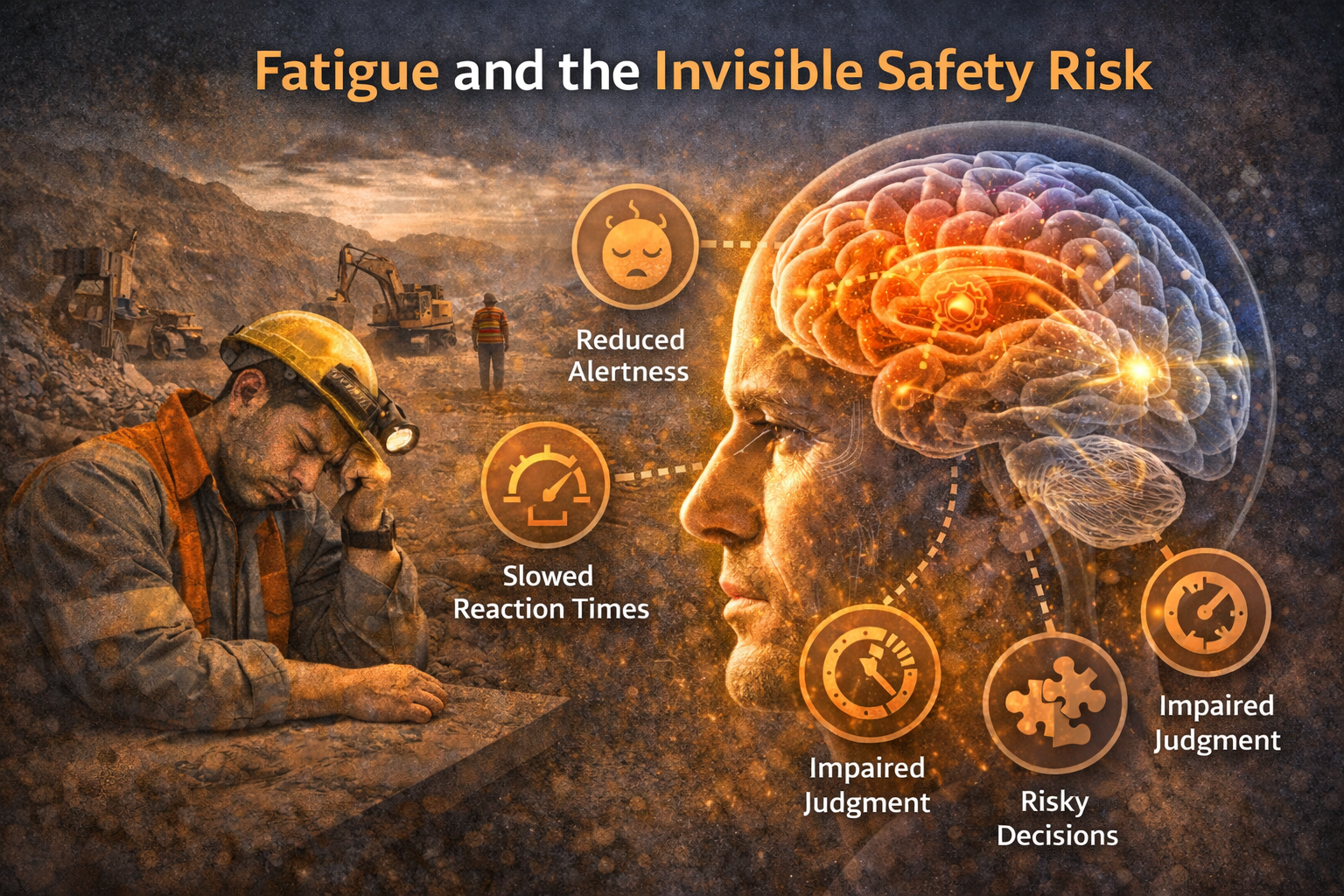
Fatigue is one of the most pervasive cognitive hazards in mining and other shift-based industries. Research consistently shows that mental fatigue reduces attention, slows reaction times and increases risk-taking behaviour. In controlled studies involving mine workers, mental fatigue significantly increased the likelihood of choosing risky decisions during simulated hazard scenarios. The danger is compounded by a phenomenon known as fatigue self-perception bias. Workers often underestimate their own level of cognitive fatigue, meaning subjective self-assessments may not accurately reflect true impairment. This mismatch between perceived and actual fatigue is particularly concerning in environments where vigilance is critical. Extended rosters, night shifts and remote operations all disrupt circadian rhythms, impairing cognitive performance. Fatigue research in mining also highlights contributing factors such as:
- long commuting times
- night shift rotations
- physically demanding work
- environmental stressors such as heat and noise
Because fatigue accumulates gradually, workers may remain unaware of the degree to which their judgement is compromised. For safety leaders, this suggests that fatigue management cannot rely solely on personal responsibility. Systems must detect and mitigate fatigue at an organisational level.
Cognitive Diversity and Neurodivergence in Risk Perception
Another emerging insight from neuroscience is that individuals perceive hazards differently due to cognitive diversity. Neurodivergence—including ADHD, autism spectrum conditions and other variations in cognitive processing—can influence attention patterns, sensory sensitivity and decision-making styles. These differences can create both safety vulnerabilities and strengths. For example:
- Some individuals exhibit hyper-focus, allowing exceptional attention to detail.
- Others demonstrate rapid pattern recognition, identifying anomalies quickly.
- However, sensory overload or impulsivity may increase risk in complex environments.
Neuroscience studies comparing frontline workers and managers also show differences in hazard identification and risk judgement processes. Workers often identify fewer hazards correctly than managers, highlighting communication gaps and perceptual differences across organisational levels. This finding has significant implications for leadership. Safety culture cannot assume uniform perception of risk across teams. Instead, leaders must recognise that cognitive diversity affects how hazards are noticed, interpreted and acted upon.
Risk in the Mining Context
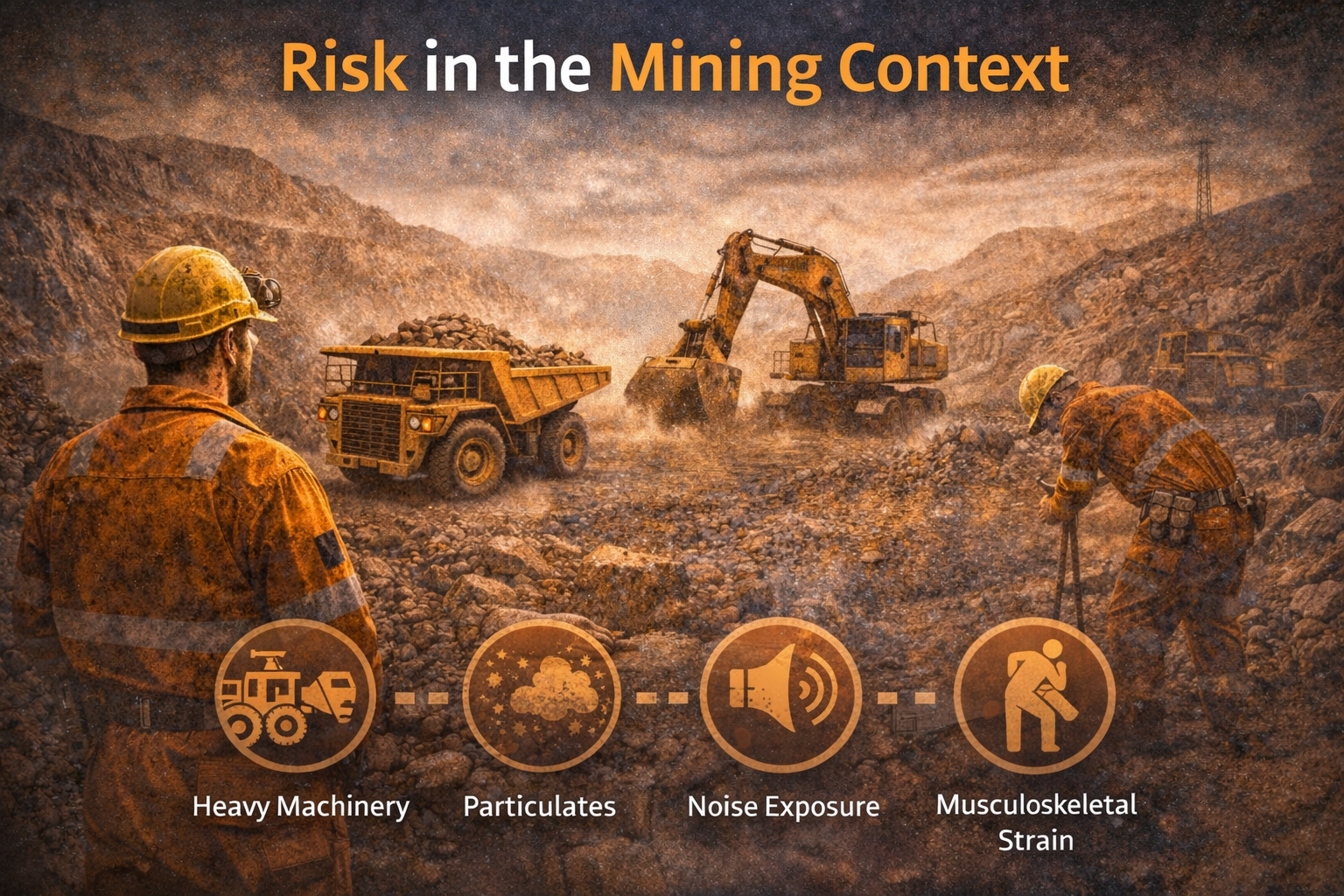
Mining remains one of the most hazardous industries globally. Although only around 1% of the global workforce is employed in mining, the sector accounts for approximately 5% of occupational fatalities worldwide, highlighting the disproportionate risk involved. Australian mining has improved safety outcomes significantly over recent decades, yet hazards remain inherent to the environment. Common risks include:
- heavy machinery operation
- airborne particulates and toxic dust
- noise exposure
- musculoskeletal strain
- remote and isolated work conditions
These hazards combine physical danger with cognitive demands. Operators must maintain high situational awareness while managing complex equipment in dynamic environments. In such contexts, understanding human cognition becomes central to effective risk management.
Integrating Neuroscience into Risk Leadership
If risk perception is biologically influenced, safety systems must evolve to support the human brain rather than expecting perfect rationality. Several frameworks can help leaders integrate neuroscience insights into risk management.
1. Neuroergonomic Safety Design
Neuroergonomics combines neuroscience with human-factors engineering to design systems aligned with cognitive capabilities. Practical approaches include:
- simplifying decision interfaces
- reducing cognitive overload
- using visual cues to highlight hazards
- designing procedures that match natural attention patterns
For example, equipment displays that emphasise critical warnings through colour or sound can improve threat recognition during high workload periods.
2. Fatigue Risk Management Systems (FRMS)
Traditional fatigue management often relies on roster limits or self-reporting. Neuroscience suggests a more comprehensive approach. Effective FRMS frameworks include:
- predictive fatigue modelling for shift scheduling
- wearable monitoring technologies
- biomathematical fatigue modelling
- environmental design (lighting, rest spaces)
These systems recognise fatigue as an organisational risk rather than an individual failing.
3. Psychological Safety and Cognitive Reporting
Many safety incidents occur because workers hesitate to report near misses or mental overload. Creating psychologically safe environments allows employees to disclose fatigue, stress or cognitive overload without fear of blame. Leadership behaviours that support this include:
- open dialogue about mental state
- normalising fatigue reporting
- removing punitive responses to human error
When workers feel safe speaking up, organisations gain valuable early warnings about emerging risks.
4. Decision-Making Frameworks Under Stress
High-risk environments benefit from structured decision tools that reduce reliance on intuition during stress. Examples include: Pre-task risk assessment frameworks
- Take 5
- Job Safety Analysis (JSA)
High-reliability organisation practices
- cross-checking
- redundancy in decision pathways
- pause points before critical tasks
These tools act as cognitive scaffolding, supporting decision-making when mental resources are limited.
Leadership Implications
Safety leadership in high-risk environments increasingly requires an understanding of human cognition. Three key leadership shifts are emerging:
1. From compliance to cognitive safety Rules and procedures remain essential, but leaders must also manage mental workload, fatigue and emotional stress.
2. From individual blame to system design Neuroscience shows that human error often arises from cognitive overload rather than negligence.
3. From uniformity to cognitive diversity Recognising different ways people perceive risk can improve team performance and hazard detection. Organisations that integrate neuroscience insights into safety management move beyond traditional models of accident prevention toward systems that genuinely support human performance.
Conclusion
High-risk industries such as mining operate at the intersection of technology, environment and human cognition. While engineering controls and procedures remain critical, neuroscience reminds us that the human brain is not an infallible decision-making system. Stress, fatigue and cognitive diversity all influence how hazards are perceived and acted upon. When these factors are ignored, risk management systems may fail despite strong compliance frameworks. For leaders in high-risk environments, the challenge is not simply enforcing safety rules but designing systems that align with how the brain actually works. By integrating neuroscience insights into risk management—through fatigue management systems, neuroergonomic design and psychologically safe leadership—organisations can strengthen their capacity to prevent accidents. In environments where a single decision can determine the difference between safety and catastrophe, understanding the biology of risk perception may be one of the most powerful tools leaders have.